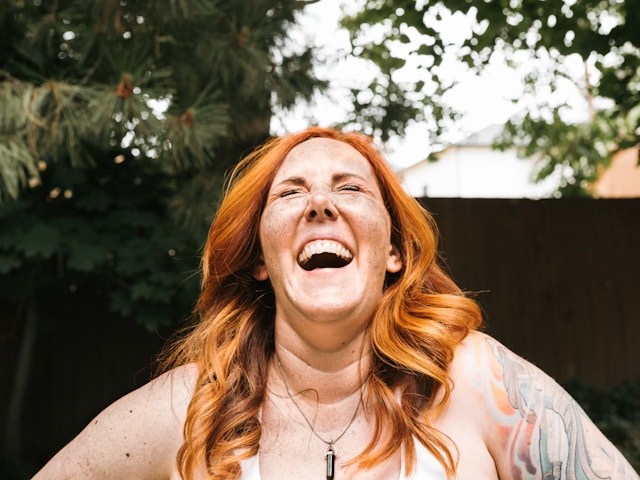
What feels better than laughing?
Pun intended: this course is no joke. Dive into wit, wordplay, and the delicious mechanics of laughter. Week Two. Taught by Associate Professor Sara Warner!
Pun intended: this course is no joke. Dive into wit, wordplay, and the delicious mechanics of laughter. Week Two. Taught by Associate Professor Sara Warner!
Browse the courses: Scroll through the course listings and choose your favorite Week One and/or Week Two course.
Click to register: Click on any course title to go directly to the Registration site where you’ll find information and pricing for Balch Hall if you’d like to live on campus. (Preview that Balch Hall info here.) Or, you can easily register for just the course—no dorm required.
Have fun: That’s it. We can’t wait to welcome you to CAU Summer 2026 and a week (or two) of big ideas, great conversation, and shared discovery!
Faculty: Theo Black, Senior Lecturer, Performing & Media Arts and Professional Actor
Week One: July 5 – 11, 2026
Class Size: 16 spots / 2 left
Schedule: Monday - Friday, 9-12 and 1:30-3:30, except Wednesday afternoon.
Location: Schwartz Performing Arts Center, Collegetown
Course Type: Classic
Price: $1,700 (Learn more about what's included in the price)
Ever wondered what it would feel like to step into someone else’s shoes—and discover something new about yourself in the process? This playful, welcoming introduction to acting invites you to do exactly that—whether you’re a total beginner or a seasoned theater lover eager to stretch in new ways. Under the guidance of professional actor and Cornell professor Theo Black, you’ll learn how to shape a character, approach a script with fresh insight, experiment with improvisation, and unlock your own creative instincts. Acting is, at heart, a natural human impulse. This fun course encourages you to lean into that impulse, make bold and imaginative choices, and discover tools that enrich not only your time “on stage” but your everyday life. Every day, we navigate challenges, pursue goals, and make choices—activities that mirror the core of acting. In this course, you’ll explore how actors translate those human experiences into compelling performances. By experimenting with a character’s motivations, obstacles, and emotional journey, you’ll begin to see how your own voice, body, and imagination become powerful instruments of storytelling. Each session of How to Harness Your Creative Power serves as a creative playground where you can stretch, take risks, and surprise yourself. You’ll explore techniques that help actors build presence, authenticity, and connection—and along the way, you’ll tap into a deeper well of confidence and self-expression.
Activity level: Moderate physical engagement in movement games and performance exercises
You may also be interested in Humor: Jokes, Wit, & Wordplay, Week Two
Faculty: Chiara Formichi, The H. Stanley Krusen Professor of World Religions
Week One: July 5 – 11, 2026
Class Size: 10 spots / 7 left
Schedule: Monday - Friday, 9-12 and 1:30-3:30, except Wednesday afternoon.
Location: On campus, classroom
Course Type: Classic
Price: $1,700 (Learn more about what's included in the price)
How can a single statue or temple tell the story of a civilization? This course uses material culture—from monumental sites like Angkor Wat and Bagan to everyday objects from Bali, Java, and beyond—to uncover the layered histories of Southeast Asia. We’ll explore how art, ritual, and design reveal patterns of trade, migration, and political power, and how religious practices—Hindu, Buddhist, Islamic, and Christian—reflect broader cultural exchange. Students will visit the Johnson Museum’s world-class collection of Asian art and learn to read objects as historical documents that illuminate the lived experience of interconnected communities.
Explore Southeast Asia’s past and present through the lens of its material culture. Each session we will focus on a selected location: starting from a specific site, we will zoom out to learn about a country’s history, politics, and religion; its cultural position in the region; and its relation in the broader inter-Asian and global patterns of communication and exchange. For example, the archaeological site of Bagan, in Burma/Myanmar, will be the stage for understanding the interaction between local animism and the arrival of Hinduism and Buddhism from South Asia, but also to understand the status of Buddhism in contemporary politics. The island of Bali will open windows on the history of Hinduism and its contemporary manifestations, as well as on dynamics of European colonial expansion—from military conquest to exoticism—, tourism, and the status of religious minorities in Indonesia. The Sulu archipelago, in the southern Philippines, will enable conversations about the early-modern global spice trade and religious transformation, from the establishment of the first Muslim sultanate to Christianization. Participants will gain new knowledge about Southeast Asia, and learn how to “read” an artifact as a historical source.
Activity level: Classroom setting.
You may also be interested in Yoga & Movement for Lifelong Well-being for All Levels, Week Two
Faculty: Kathleen Arnink, Senior Lecturer & Director of Undergraduate Studies, Viticulture and Enology, CALS
Faculty: Annemarie Morse, International Wine Judge and Educator
Week One: July 5 – 11, 2026
Class Size: 10 spots / 4 left
Schedule: Monday - Friday, 9-12 and 1:30-3:30, no class Wednesday afternoon. Gourmet lunch Wednesday.
Location: On campus classroom with several off-campus trips
Course Type: Ultra Premium
Price: $2,400 (Learn more about what's included in the price)
Delve into an experiential journey of flavors in this Ultra Premium Level CAU Summer course to enhance your understanding and appreciation of harmonious wine and food pairing. Cultivating the Epicurean Palate will guide your development in the art and understanding of the science of choosing wines with an exciting assortment of foods.
Through engaging lectures, daily tastings, and activities outside of the classroom, seasoned wine enthusiasts and novices alike will gain the knowledge and confidence to create well balanced wine and food pairings. Further hone your palate through out-of-the-classroom learning excursions designed to elevate your sensory awareness and enjoyment.
Your experience of what’s in your wine glass depends on many factors. What you taste and how you taste it is influenced by everything—from genetics and prior experiences, through the qualities of the food you’re nibbling, to your level of attention in the moment when you take a sip.
Join Cultivating the Epicurean Palate and discover for yourself how elements including textures, scents, and visual appearance interplay to impact what you taste. Learn trusted guidelines, as well as how to value your personal preferences and enjoy experimentation.
Cultivating the Epicurean Palate is both an introduction to the chemicals that impact flavor, as well as your chance to embark on a personal flavor-filled quest. Join CAU Summer for this delectable journey of learning and life enrichment.
Important Note: Participants must be 21 years of age or older to join this course.
Activity Level: Low impact. Short walks on uneven ground.
Allergies: All major allergens may be encountered during this course. Please note food allergies at registration.
You may also be interested in The Game Changing Golf Clinic for All Players, Week Two
Faculty: Charlie Green, Senior Lecturer in the Department of Literatures in English
Week One: July 5 – 11, 2026
Class Size: 12 spots / 5 left
Schedule: Monday - Friday, 9-12 and 1:30-3:30, except Wednesday afternoon.
Location: On campus, classroom
Course Type: Plus
Price: $1,825 (Learn more about what's included in the price)
Whether you're a seasoned diarist, a first-time writer, or somewhere in between, Memoir—Discovering Who You Are on Paper is designed for you. Through daily prompts, insightful guidance, and exploratory inquiry, discover how to turn your memories into your memoir. Delve deep into the craft of memoir writing, practicing essential techniques that bring your story to life including:
Activity level: Classroom setting.
You may also be interested in Literature: Reading Jane Austen, Week Two
Faculty: Robert A. Raguso, Professor of Neurobiology & Behavior
Week One: July 5 – 11, 2026
Class Size: 15 spots / 0 left (We encourage you to add yourself to the waitlist for this course in the registration platform as well as to select a second-choice course as a backup, should a space not become available.)
Schedule: Monday - Friday, 9-12 and 1:30-3:30, except Wednesday afternoon.
Location: On campus, classroom, some field work
Course Type: Plus
Price: $1,825 (Learn more about what's included in the price)
Have you ever held a fragment of ancient resin in your hand and wondered why it was once prized like gold? Or breathed in the sharp scent of a bitter orange leaf and felt the trace of a story that traveled across continents? In this course, you’re invited to step directly into the human quest for nature’s most extraordinary gifts—spices, medicines, sacred plants, and the biodiversity that shaped entire civilizations. Across five lively days, you’ll explore how the natural world has driven exploration, sparked spiritual traditions, powered economies, and inspired everything from mythologies to medical breakthroughs. With visits to Cornell’s remarkable natural history collections, you’ll see, smell and touch the very materials that fueled global desire—from rare spices to botanical curiosities—and discover how abundance and scarcity in nature have shaped human culture for thousands of years.
Explore how the study of scarcity and abundance links two major realms of human endeavor—ecology and economics—both rooted in the Greek oikos, or “house.” Discover the often-unseen range of nature’s benefits, from novel foods and medicines to building materials and pharmacological compounds. Examine the natural forces that create rarity, drive value, and shape the human marketplace. Investigate the evolution of biological diversity and its far-reaching influence on human health, language, culture, cuisine, and history. Engage directly with the stories, materials, and evolutionary pressures that reveal how biodiversity has guided human lives across millennia. Through guided discussions, specimens-based exploration, and hands-on encounters with historic and contemporary biological treasures, you’ll begin to see how deeply our lives depend on and are enriched by the diversity of life around us.
Activity level: Light to moderate walking during visits to Cornell’s natural history collections; otherwise, primarily discussion-based.
You may also be interested in Plant Medicine—Exploring Nature’s Healing Potential, Week Two
Faculty: Heather Huson, Associate Professor of Animal Genetics, Animal Science
Faculty: Meghan Jensen, Ph.D., Raptor Researcher & Trainer, Cornell Raptor Program, Department of Animal Science
Week One: July 5 - 11, 2026
Class Size: 16 spots / 0 left (We encourage you to add yourself to the waitlist for this course in the registration platform as well as to select a second-choice course as a backup, should a space not become available.)
Schedule: Monday - Friday, 9-12 and 1:30-3:30, except Wednesday afternoon.
Location: On campus, classroom, with some field work
Course Type: Ultra
Price: $2,400 (Learn more about what's included in the price)
Discover the fascinating world of birds of prey through an immersive, hands-on week of exploration. Each day combines engaging lectures, close-up encounters with live raptors, and behind-the-scenes activities at Cornell’s raptor facilities. Participants will learn how to identify local species, examine museum specimens, see raptor training and cooperative care in action, and get the opportunity to handle one of the Cornell Raptor Program’s birds, called education ambassadors. You’ll also gain insight into the conservation and education work that supports these remarkable animals. No prior experience is needed, just curiosity and a love of wildlife!
Throughout the week, participants will delve into the natural history and adaptations that make raptors such extraordinary predators and essential to the ecosystems they inhabit. Morning lectures and activities provide a foundation in identification, ecology, and anatomy, while afternoon field and facility visits bring these lessons vividly to life. You’ll explore a wide range of topics, including field ecology and research, raptor health and nutrition, modern training and enrichment, and conservation and public education.Behind the scenes at the Cornell Raptor Program, you’ll meet a variety of species—including eagles, hawks, falcons, owls, and vultures—and learn about the science and ethics of captive raptor management. Discussions with students and staff will highlight how these birds inspire conservation action and public awareness.
Blending science, storytelling, and direct experience, this course offers an unforgettable window into the lives of birds of prey. Participants will come away with a deeper understanding of raptor biology, conservation, and care. They will also observe firsthand the connection between raptors and their handlers, experiencing the trust, communication, and cooperation that make raptor education and conservation programs possible.
Learn more about Cornell's Raptor Program
You may also be interested in Wings of Discovery—A Beginner's Guide to Birds, Week Two
Faculty: Dr. Keila Dhondt, Senior Lecturer of the Microbiology/Immunology and Biomedical Sciences Departments, Cornell College of Veterinary Medicine
Week One: July 5 - 11, 2026
Class Size: 11 spots / 0 left (We encourage you to add yourself to the waitlist for this course in the registration platform as well as to select a second-choice course as a backup, should a space not become available.)
Schedule: Monday - Friday, 9-12 and 1:30-3:30, except Wednesday afternoon.
Location: On campus, classroom, with some field work
Course Type: Plus
Price: $1,825 (Learn more about what's included in the price)
Step into a fascinating world where wild birds and human lives intertwine. In this immersive course, you’ll explore how birds captivate our imagination, inspire our creativity, and play vital roles in ecosystems and human culture. From their songs echoing through forests to their presence in art, literature, and music, birds shape our world in countless ways. Discover their influence on cuisine, health, and conservation efforts, all while gaining hands-on experience in the field and the lab. Whether you're marveling at their vibrant diversity on a birdwatching walk or uncovering their roles in zoonotic diseases, this course invites you to see birds in an entirely new light. Are you ready to spread your wings and dive into this whimsical adventure?
Activity level: You’ll enjoy a mix of classroom learning, leisurely field trips around the Cornell campus, and hands-on experiences in laboratories and museums. Expect minimal walking on flat terrain.
You may also be interested in Art History: American Art From the Hudson River School to Louis Comfort Tiffany, Week Two
Faculty: Jacob Klein, MA'06, PhD'10, Associate Professor of Philosophy, Colgate University
Week One: July 5 - 11, 2026
Class Size: 20 spots / 4 left
Schedule: Monday - Friday, 9-12 and 1:30-3:30, except Wednesday afternoon.
Location: On campus classroom
Course Type: Classic
Price: $1,700 (Learn more about what's included in the price)
Stoicism is everywhere right now—invoked by Silicon Valley moguls, productivity gurus, and social media influencers as a recipe for emotional detachment, personal grit, or bulletproof calm. But this modern, meme-ified Stoicism barely resembles the original philosophy. The ancient Stoics—Greek thinkers writing around 300 BCE—were not selling emotional numbness or life hacks. They were students of Socrates and Plato who developed a bold, demanding vision of the universe and humanity’s place within it—one that wove together ethics, logic, physics, and cosmology into a single, radical way of life. Their ideas shaped the moral imagination of the Roman world, influencing figures from Cicero to Caesar, and continue to echo today in surprising places—from modern psychotherapy to contemporary debates about emotion, responsibility, and resilience. This course peels back the modern caricature to reveal Stoicism as it really was: intellectually rigorous, ethically ambitious, and far more unsettling—and useful—than popular culture suggests.
Across the week, we will read and discuss original ancient texts by Stoic philosophers such as Chrysippus, Epictetus, and Marcus Aurelius, alongside earlier writers who profoundly shaped Stoic thought, including Homer, Heraclitus, and Plato. These texts invite us into a worldview that treats emotions not as private feelings to be indulged or suppressed, but as deeply connected to reason, judgment, and our understanding of nature itself.
We will explore how the Stoics understood change, loss, anger, fear, and misfortune—and why their responses to these universal human experiences can feel at once bracingly familiar and strikingly alien. Along the way, we will ask which elements of the ancient Stoic vision still speak powerfully to life today, which ones resist easy translation, and how later thinkers—from Roman statesmen to modern psychologists—have selectively adapted Stoic ideas for contemporary use. The result is not a self-help manual, but a sustained encounter with a philosophy that challenges how we think about control, responsibility, and what it means to live well.
The writings of the ancient Stoics confront us with a vision of human life that is foundational to Western thought—and yet deeply strange by modern standards. Like Homer and Plato before them, the Stoics ask what kind of beings we are in a universe governed by order, change, and necessity. You may not always agree with their answers, but sustained engagement with them is invariably clarifying. This course offers Stoicism not as a shortcut to serenity, but as a rigorous philosophical encounter that sharpens judgment, deepens perspective, and unsettles easy assumptions.
Activity level: Classroom-based learning with small group discussions and plenty of time to ask questions.
You may also be interested in Western Civilization.Technology: Engineering the Roman Empire, Week Two
Faculty: Dr. Ambre Dromgoole, Assistant Professor of Africana Religions and Music, Africana Studies & Research Center
Week One: July 5 – 11, 2026
Class Size: 1o spots / 4 left
Schedule: Monday - Friday, 9-12 and 1:30-3:30, except Wednesday afternoon.
Location: On campus, classroom
Course Type: Classic
Price: $1,700 (Learn more about what's included in the price)
From Ryan Coogler’s latest blockbuster hit, Sinners, to the gospel of Oprah, Sinners: How Religion Shapes Popular Culture is a course for everyone from music enthusiasts to movie buffs. Through broad engagement with visual art, film, music and television, you’ll learn to think critically about how religion and spirituality show up on your television screens, in your favorite albums, and the world around you. Sinners: How Religion Shapes Popular Culture will take you on a journey through the charismatic appeal of broadcasting mega-preachers like T.D. Jakes and Joel Osteen, the musical magnetism of Hindu-inspired spiritual jazz artist Alice Coltrane, Gordon Parks’ captivating Nation of Islam photography in Life Magazine, the theatrical genius of Tony Kushner’s supernatural realism in Angels in America, and so much more. You’ll gain new perspective and expand your horizons on cultural artifacts you know well and those you may have never heard of before. Through activities, field trips, and interactive class discussions, you’ll feel the spirit and get “good religion” as you learn about the layers of history, culture, and tradition that undergird the pop cultural zeitgeist.
Sinners is an exploration filled with sound, visuals, and experiences designed to enhance your appreciation of the significance of art, films, and performances, not just as entertainment, but as a key part of cultural phenomena that both shapes and reflects our times.
Activity level: Classroom setting.
You may also be interested in Film: Movies about Movies ~ The Magic of Cinema, Week Two
Faculty: Misha N. Ailsworth '16, Assistant Professor, Psychology
Week One: July 5 - 11, 2026
Class Size: 10 spots / 5 left
Schedule: Monday - Friday, 9-12 and 1:30-3:30, except Wednesday afternoon.
Location: On campus, classroom
Course Type: Classic
Price: $1,700 (Learn more about what's included in the price)
What counts as a community? How do communities shape who we are? These questions guide our inquiry in this week-long introduction to the interdisciplinary field of community psychology. Community psychology examines the interrelationship between individual well-being and the multiple social structures and contexts with which individuals interact. Community psychologists are united by a shared commitment to understanding individuals using a multidisciplinary perspective, including developmental psychology, education, and sociology.
Through brief lectures, interactive discussions, and experiential exercises, you'll explore the theories and concepts community psychologists use to understand how contexts shape human experience. You will learn to recognize how environments—from neighborhoods to organizations to social movements—influence individual and collective well-being. You'll engage with key concepts such as identity, community, and ecological context, as you examine real-world examples and consider how community psychologists work alongside communities. Drawing on readings that span the history of community psychology to contemporary questions about belonging and home, you will reflect on your own position within your communities. Throughout the week, you'll work on crafting a written personal narrative that reflects your deepening engagement with your values and an evolving understanding of the communities to which you belong.
Community psychology is an exploration filled with insights designed to enhance your understanding of the contexts that shape who we are, not just as individuals, but as members of interconnected communities. This course offers a lens for seeing how the personal is always social, and how communities can be sites of both challenge and transformation. You'll walk away with new ways of thinking about belonging, well-being, and social change.
Activity level: Classroom setting with lively discussions and personal reflection.
You may also be interested in Photography: A Hands-On History, Week Two
Faculty: Tim Devoogd, Professor Emeritus, Psychology
Week One: July 5 - 11, 2026
Class Size: 20 spots / 0 left (We encourage you to add yourself to the waitlist for this course in the registration platform as well as to select a second-choice course as a backup, should a space not become available.)
Schedule: Monday - Friday, 9-12 and 1:30-3:30, except Wednesday afternoon.
Location: On campus classroom
Course Type: Plus
Price: $1,825 (Learn more about what's included in the price)
Your brain weighs about three pounds—and somehow generates memory, desire, fear, humor, belief, habit, love, and the feeling that you are you. In this course, that miracle is taken apart and rebuilt in real time. Through lab-style investigation, hands-on experiments, and direct encounters with actual brains, You and Your Brain exposes how folds of tissue become thought, how chemistry turns into behavior, and how subtle biological shifts can alter a life’s trajectory. Expect surprises, revelations, and moments that permanently change how you understand your own mind—because once you see how the brain actually works, you can’t unsee it.
This is not a lecture course you sit through. It’s an immersive exploration that invites you inside the machinery of perception, learning, emotion, and identity. You’ll handle real brains, trace neural “highways,” observe how signals move, test how learning happens, and examine what occurs when systems misfire. Along the way, you’ll encounter some of the most fascinating questions in neuroscience: Why do we learn the way we do? How do hormones shape who we become? What distinguishes a healthy brain from one in distress—and what does “successful aging” actually mean?
Across the week, the course unfolds like a guided tour through the brain’s inner workings—beginning with its physical structure and accelerating into the forces that animate it. You’ll trace the brain’s information highways, handle preserved specimens, and participate in a sheep brain dissection that transforms abstract diagrams into unforgettable reality. As you move deeper, electrical signals, synapses, reflexes, and neurochemistry come into focus, revealing how sensation, action, and decision emerge from microscopic events.
The course then pivots toward what the brain does over time: how it learns, how hormones sculpt development and behavior, and how experience leaves physical traces in neural tissue. You’ll collect and interpret real data, compare brains shaped by different learning histories, and explore how biology and environment interact across the lifespan. The week culminates with a clear-eyed look at neurological disruption and resilience—from schizophrenia and Alzheimer’s disease to the science of successful aging—offering a powerful, human perspective on what happens when the brain’s systems falter, adapt, or endure.
Throughout, the emphasis is on discovery rather than memorization. You will test ideas, examine evidence, and leave with a visceral understanding of the organ that governs everything you think, feel, and do.
You and Your Brain is an immersive exploration of how a three-pound organ produces thought, emotion, learning, and identity. Through hands-on labs, real data, and direct encounters with brains, the course reveals how structure becomes experience—and how small biological changes can have profound consequences. You’ll leave seeing your own mind with new clarity, curiosity, and awe.
Activity level: Classroom-based learning combined with hands-on lab work. Activities include periods of standing, close observation, collaborative experiments, and optional participation in anatomical dissection, with proximity to preserved biological specimens and related laboratory chemicals.
You may also be interested in Movies about Movies: The Magic of Cinema, Week Two
In addition to your core course, optional Wednesday Afternoon Seminars offer a chance to step outside the classroom and experience Cornell—and Ithaca—from a different angle. These seminars take place midweek when your course will not be in session and can be added during registration. Space is limited.
Wednesday, July 8 | 1:30–3:30 p.m.
Behind the Scenes at Cornell's Labor & Management Archives: The Kheel Center for Labor-Management Documentation & Archives is the largest archive in the U.S. dedicated to preserving both labor and management history. Explore the history of the American workplace with Archivist Steven Calco. Limited to 20 participants.
Fee: $100 ($50 off for Balch Hall residents)
Sailing on Cayuga Lake: Spend your afternoon learning sailing basics with instructors at Cornell's Merrill Family Sailing Center
Fee: $200 ($50 off for Balch Hall residents)
Faculty: Nancy Green, Gale & Ira Drukier Curator, Johnson Museum of Art (retired)
Week Two: July 12 – 18, 2026
Class Size: 20 spots / 0 left (We encourage you to add yourself to the waitlist for this course in the registration platform as well as to select a second-choice course as a backup, should a space not become available.)
Schedule: Monday - Friday, 9-12 and 1:30-3:30, except Wednesday afternoon.
Location: The Herbert F. Johnson Museum of Art
Course Type: Premium
Price: $2,225 (Learn more about what's included in the price)
Step into a week of looking closely, traveling thoughtfully, and encountering American art in places where it comes alive. In this immersive course, you’ll spend your days engaging directly with paintings, photographs, prints, and decorative objects that shaped a distinctly American visual language. Guided by Nancy Green, longtime curator at the Johnson Museum of Art, you’ll explore how artists responded to landscape, innovation, conflict, and beauty—learning how to read images with greater confidence and curiosity. Through discussion, close looking, and shared discovery, you’ll experience American art not as a distant timeline, but as a series of creative choices made by artists grappling with a changing nation.
Your week will unfold across exceptional settings, from exclusive access to works in Cornell’s Johnson Museum and the Kroch Library archives to curated field trips that extend the classroom beyond campus. You’ll examine luminous glass at the Corning Museum of Glass, encounter iconic American imagery at The Rockwell Museum, and travel to Rochester to explore the Memorial Art Gallery and the George Eastman Museum. Along the way, you’ll connect ideas across media, sharpen your visual literacy, and enjoy the pleasure of learning alongside fellow participants who share your curiosity—returning home with a deeper appreciation for American art and a richer way of seeing the world around you.
This immersive course invites you to experience American art through close looking, expert guidance, and unforgettable site visits. With privileged access to Cornell’s Johnson Museum collections and the Kroch Library archives, complemented by curated excursions to Corning and Rochester, you’ll engage directly with masterworks across painting, photography, glass, and design. The experience sharpens visual intelligence, deepens cultural insight, and leaves you seeing American art—and its enduring influence—with fresh clarity and confidence.
Activity level: Classroom setting, art museum visits, standing and sitting.
You may also be interested in Popular Culture: Sinners ~ How Religion Shapes Popular Culture, Week One
Faculty: Elliot Shapiro, Knight Foundation Director of the Writing in the Majors
Week Two: July 12 – 18, 2026
Class Size: 20 spots / 2 left
Schedule: Monday - Friday, 9-12 and 1:30-3:30, except Wednesday afternoon.
Location: On campus classroom
Course Type: Classic
Price: $1,700 (Learn more about what's included in the price)
What is it about movies that feels magical—dreamlike, immersive, unforgettable? This course invites you to step inside cinema itself, exploring films that turn their gaze inward to reflect on how movies are made, how they are watched, and how they shape the way we remember, imagine, and understand the world. From silent-era inventions to contemporary reflections on cinematic memory, you’ll experience films that celebrate the artistry, fragility, and emotional power of the medium. Guided by Elliot Shapiro, you’ll move through a selective, thoughtfully curated history of American cinema, examining how technological change, cultural context, and storytelling traditions have transformed the movie-going experience. This seminar is designed for viewers who love movies and want to think more deeply about what happens when we sit in the dark and let images flicker to life.
Over the course of the week, you’ll engage deeply with feature films that dramatize both sides of cinema’s magic: the act of making movies and the experience of watching them. Before arriving on campus, participants will view a small set of landmark films—ranging from the playful self-awareness of early silent comedy, to Hollywood’s golden-age self-mythology, to contemporary works that interrogate authorship, identity, and memory. These films will serve as shared touchstones for discussion, close reading, and collective reflection. In class, you’ll enrich these conversations by viewing carefully selected excerpts from documentaries that illuminate cinema’s technical, aesthetic, and cultural dimensions—how images are crafted, how light shapes meaning, how film history has preserved (and obscured) certain stories. Class time will be devoted to thoughtful discussion, close analysis of scenes and sequences, and exploration of how movies both mirror and mold our inner lives. Readings and contextual materials provided by the instructor will further deepen your engagement, offering new ways to think about the films you love—and the ones that stay with you long after the credits roll.
What You’ll Walk Away With:
Activity level: Classroom setting
You may also be interested in Acting: How to Harness Your Creative Power, Week One
Faculty: Matt Baughan, Golf Course Head Pro & Men’s Varsity Coach with Kelly Baughan, and staff of the Robert Trent Jones Golf Course
Week Two: July 12 – 18, 2026
Class Size: 16 spots / 4 left
Schedule: Monday - Friday, 9-12 and 1:30-3:30, except Wednesday afternoon.
Location: Robert Trent Jones Golf Course, Cornell University
Course Type: Premium
Price: $2,225 (Learn more about what's included in the price)
Unlock your full potential in golf with this game changing clinic designed for golfers of all skill levels. Whether you're just starting out or seeking to refine your advanced skills, this comprehensive clinic is the perfect opportunity for personal growth in the game. Taking a personalized approach, this course will meet you wherever you are in the sport so that you can learn how to enhance your current strengths and build proficiency in aspects you want to improve. Our experienced instructors will assess your skills and tailor the instruction to meet your specific needs, ensuring maximum growth and development.
Tee off to a new level of golf mastery in The Game Changing Golf Clinic for All Players and take your game to new heights.
Activity level: Walking 5 to 7 miles each day over the somewhat uneven terrain of the golf course.
You may also be interested in: Discovering Raptors: From Field to Aviary Week One
Faculty: Corey Ryan Earle '07, Visiting Lecturer in American Studies, University Historian
Faculty: Evan Fay Earle '02, MS '14, Dr. Peter J. Thaler '56 University Archivist
Faculty: Ben Sandberg, MPA'17, Executive Director, The History Center in Tompkins County
Week Two: July 12 – 18, 2026
Class Size: 20 spots / 0 left (We encourage you to add yourself to the waitlist for this course in the registration platform as well as to select a second-choice course as a backup, should a space not become available.)
Schedule: Monday - Friday, 9-12 and 1:30-3:30, except Wednesday afternoon.
Location: Kroch Library, Rare & Manuscript Collections
Course Type: Plus
Price: $1,825 (Learn more about what's included in the price)
Immerse yourself in the history of Cornell’s hometown and the many ways that Cornell and Ithaca have shaped each other for more than 150 years. What brought Ezra Cornell to the area, and how did Ithaca attract and incubate an Ivy League university? Cornell and Ithaca’s histories are intertwined in ways that have meaningfully shaped their respective identities.
This course will explore Cornell and Ithaca through a sense of PLACE: People, Land, Architecture, Culture, and Enterprise. From the Hill to the Commons, from the silent film industry to the ice cream sundae’s invention, participants will study local history through engaging lectures and by interacting with rare materials and archival collections to examine how local leaders, businesses, landscapes, buildings, and traditions have left their mark and continue to influence life today downtown and on the Hill.
Our time will be split between The History Center in Tompkins County, located on the Commons in downtown Ithaca, and the Cornell University Archives in Kroch Library, deep beneath the Arts Quad on campus. Classroom discussions will focus on manuscripts, maps, photographs, and archival objects that illuminate milestones and moments of change, supplemented with daily walking tours to historic sites to connect the past and present.
Activity level: The course will include several walking tours, rain or shine, lasting approximately one hour and covering distances of up to 1 to 1.5 miles, combined with classroom lectures and discussions.
You may also be interested in Writing: Memoir Writing—Discovering Who You Are on Paper, Week One
Faculty: Elisha Cohn, Professor, Literatures in English
Week Two: July 12 – 18, 2026
Class Size: 10 spots / 1 left
Schedule: Monday - Friday, 9-12 and 1:30-3:30, except Wednesday afternoon.
Location: On campus, classroom
Course Type: Classic
Price: $1,700 (Learn more about what's included in the price)
Why is Pride and Prejudice considered one of the so-called Great English Novels, and why is its author, Jane Austen, so perennially popular? Why do so many readers across the globe not only love but identify with Austen’s fiction? This course will examine Jane Austen’s role in the history of the novel and consider her enduring popularity. In novels like Pride and Prejudice, Austen opened up new possibilities for the novel as a literary form. This class offers an in-depth examination of Pride and Prejudice—from its composition and historical contexts to its narrative techniques and its many critical and creative afterlives in literature, culture, and film. Supplemented by samples from many of Austen’s other works, biographies, and letters, we’ll explore a wide range of approaches to literary interpretation. Students will come away from this course knowledgeable about the significance of Jane Austen as a cultural icon, methods of literary and cultural criticism, and the novel as a major literary form.
This course focuses on in-depth discussion of Pride and Prejudice as a gateway to understanding Austen’s world, the significance of fiction, and, more broadly, how culture sustains communities. Many our interactive, discussion-based sessions will focus on close readings that highlight Austen’s literary experimentation (with free indirect style, the marriage plot, and psychological characterization). Others will focus on Austen’s social contexts and commentary (on issues such as the legal status of women and the French revolution). Over the course of the week, we will discuss Pride and Prejudice in depth along with short excerpts read in class from Austen’s other published and unpublished fiction, contemporary literary and political texts, critical commentary, and popular film and fiction adaptations. We will also try our hand at some experiments with adapting Austen ourselves—both in order to better understand Austen’s stylistic choices, and to understand and extend her project of social criticism.
It is a truth universally acknowledged that students who have read Jane Austen must be in want of an opportunity to continue that delightful experience, and that those who have not read her novels should. By immersing ourselves in Austen’s fictional world we will enrich our experience of her novels and sharpen our awareness of the pleasures of reading.
You may also be interested in Histories in Stone & Spirit ~ Understanding Southeast Asia Through Objects, Week One
Faculty: Deborah Starr, Professor of Modern Hebrew and Arabic Literature and Film, Department of Near Eastern Studies; Incoming Morris Escoll 1916 Director of Jewish Studies (2026-2029)
Week Two: July 12 – 18, 2026
Class Size: 10 spots / 4 left
Schedule: Monday - Friday, 9-12 and 1:30-3:30, except Wednesday afternoon.
Location: On campus, classroom
Course Type: Classic
Price: $1,700 (Learn more about what's included in the price)
Jewish History through Literature: A. B. Yehoshua’s Mr. Mani invites you to experience modern Jewish history through the layered, unconventional brilliance of A. B. Yehoshua’s acclaimed novel Mr. Mani. Reading the novel in advance, you’ll spend the week unraveling a story that moves backward through time—tracing generations, geographies, and identities across the Mediterranean world. Through close reading and sustained conversation, the course offers a powerful lens on memory, inheritance, and the ways personal stories shape collective history. At once literary, historical, and deeply human, Mr. Mani opens a space to explore the intersections of Sephardic and Ashkenazi experience, the shifting politics of the 19th and 20th centuries, and the enduring questions of belonging and identity. This seminar is designed for readers who love to think slowly and deeply, and who enjoy discovering how novels can illuminate history in ways no textbook can.
Mr. Mani is a landmark work of Hebrew literature by A. B. Yehoshua (1936–2022), one of Israel’s most celebrated and influential writers. Over the course of his prolific career, Yehoshua reshaped modern Hebrew fiction through novels, plays, essays, and short stories that probe identity, history, and moral complexity. In Mr. Mani, he draws deeply on his own Sephardi heritage and the history of Jerusalem—the city of his birth—crafting a novel that unfolds through five conversations, each set in a different historical moment and told from only one side of the dialogue. The result is a haunting, cumulative portrait of Jewish life shaped by what is remembered, misheard, or left unsaid.
As the narrative moves backward from the late 20th century to the mid-19th century, you’ll explore the lives of Sephardic Jews living across the Mediterranean—from Jerusalem and Crete to Athens, Istanbul, and beyond—while examining their encounters with Ashkenazi Jews from Central and Eastern Europe. The course follows the arc of the novel’s structure, using its reverse chronology to examine how history is transmitted across generations, how cultural tensions emerge, and how individual lives are shaped by forces larger than themselves. Complementing your literary discussions, you’ll visit Cornell’s Rare and Manuscripts Collection to engage directly with photographs and documents from the periods explored in the novel, gaining firsthand insight into the library’s rich Judaica holdings and grounding the text in lived historical experience.
Activity level: Classroom setting with one on-campus outing.
You may also be interested in Psychology: How We Show Up ~ Community Psychology & The Stories We Tell, Week One
Faculty: Dr. Sara Warner, Director of LGBT Studies and Associate Professor of Performing & Media Arts
Week Two: July 12 – 18, 2026
Class Size: 15 spots / 5 left
Schedule: Monday - Friday, 9-12 and 1:30-3:30, except Wednesday afternoon.
Location: Black Box Theater, Schwartz Center for the Performing Arts, Collegetown
Course Type: Classic
Price: $1,700 (Learn more about what's included in the price)
Why do we laugh—and what makes something funny? This lively, interactive course invites you to explore humor as both a cultural force and a creative practice. Blending theory with guided exercises, you’ll examine how jokes, wit, and wordplay function across everyday conversation, performance traditions, literature, and popular culture, while also discovering how humor connects people, disrupts norms, and sharpens perception. Led by Dr. Sara Warner, this course creates a playful, supportive space where curiosity and creativity go hand in hand. You’ll learn not only why something is funny, but how humor works—by exploring examples and trying small exercises yourself, and engaging with the joyful, surprising mechanics of laughter.
Across the week, you’ll investigate the anatomy of humor—what makes a joke land, how wordplay generates pleasure, and why timing, structure, and context matter. Through discussion, viewing, listening, and embodied exercises, you’ll explore humor’s role in culture and communication, from the social power of wit to the subversive potential of comedy. Each session combines close attention to examples with brief opportunities to experiment, encouraging you to think critically while remaining delightfully off-balance.
Just as importantly, this course invites you to experience humor from the inside. Daily sessions incorporate creative exercises designed to loosen habits, spark spontaneity, and encourage experimentation. You’ll practice analyzing and lightly experimenting with jokes and wordplay, and have the option to perform a short (approximately 60-second) excerpt of a comedian’s material from memory in front of the class, gaining insight into the challenges and pleasures of comic performance. The week leaves you with a , playful, and a little bit silly.
Activity level: Classroom-based with interactive elements alongside viewing, listening, and discussion.
You may also be interested in Wine & Food Pairing: Cultivating the Epicurean Palate, Week One
Faculty: Sarah Wagner, PhD, Public Information Specialist, Lab of Ornithology
Week Two: July 12 – 18, 2026
Class Size: 20 spots / 9 left
Schedule: Monday - Thursday, 7:00 a.m. - 12:00 p.m. Friday, 7:30 a.m. - 1:00 p.m. NOTE: Early morning bird watching times are essential to this course and will not be adjusted.
Location: The Cornell Lab of Ornithology Sapsucker Woods Sanctuary, classroom, one field trip
Course Type: Plus
Price: $1,825 (Learn more about what's included in the price)
Are you curious about birds but don’t know where to start? Whether you’re a complete beginner or someone with a little experience, Wings of Discovery is designed to guide you through the exciting world of bird watching. In this course, we won’t just be sitting in the classroom—we’ll get outside and explore the birds of the Finger Lakes region of New York, which is home to more than 300 species of birds occupying a variety of habitats from natural lakes to gorges, expansive wetlands, farm fields, and even compost piles. Together, we’ll build your understanding step by step, and I’ll provide expert guidance along the way. You’ll have the unique opportunity to experience behind-the-scenes access to Sapsucker Woods and the Cornell Lab of Ornithology, as well as to learn from researchers and scientists who are at the forefront of ornithology. Whether you're spotting birds in the field or getting insights from leading ornithologists, you’ll gain new perspectives on the birds you see, while developing the skills to continue exploring on your own and contributing to science.
Join us for an enriching journey into the fascinating world of birds, where scientific inquiry meets hands-on exploration in the scenic landscapes of the Finger Lakes region. Whether you're a novice birdwatcher, an aspiring ornithologist, or simply curious about the wonders of avian life, this course promises to inspire curiosity, foster discovery, and deepen your appreciation for the remarkable diversity of birds inhabiting our world.
Wings of Discovery—A Beginners Guide to Birds promises to inspire curiosity, foster discovery, and deepen your appreciation for the remarkable diversity of birds inhabiting our world.
Activity level: Walking one to three miles per day over slightly uneven terrain. We will plan on being in the field and classroom daily from 7 am‑ 12 pm.
You may also be interested in Wild Birds & Human Interactions: Exploring Connections, Week One
Faculty: David Todd, BA and BFA '06, Photographic Artist and eCornell Course Facilitator
Faculty: Jennifer Gioffre Todd, Photographic Artist and Manager of Art Studios
Week Two: July 12 – 18, 2026
Class Size: 10 spots / 0 left (We encourage you to add yourself to the waitlist for this course in the registration platform as well as to select a second-choice course as a backup, should a space not become available.)
Schedule: Monday - Friday, 9-12 and 1:30-3:30; no class Wednesday afternoon.
Location: On campus, classroom
Course Type: Ultra Premium
Price: $2,400 (Learn more about what's included in the price)
Step into the darkroom, the archive, and the museum as you explore photography from the inside out. Photography: A Hands-On History invites you to experience the medium not just as an image on a wall, but as a material process—one shaped by chemistry, light, touch, and time. This immersive studio course places you at the crossroads of art and innovation, tracing photography’s evolution from the earliest experimental prints to contemporary digital practice, all while you create original work with your own hands. Designed for curious beginners and experienced photographers alike, the course blends making, looking, and thinking. Each day connects hands-on image creation including behind-the-scenes access to Cornell’s extraordinary collections, allowing you to see—and feel—how photographic processes have shaped visual culture for nearly two centuries.
Your week unfolds as a living dialogue between studio practice and photographic history. In the studio, you’ll learn and experiment with historic and modern printing techniques—coating light-sensitive emulsions, exposing images using sunlight and enlargers, and developing prints in the darkroom. Processes such as salt printing, cyanotype, Van Dyke brown, silver gelatin, and fine-art inkjet printing become tools for exploration rather than abstractions, revealing how different methods produce radically different visual and emotional effects.
These hands-on sessions are paired with intimate visits to Cornell’s museum and library collections, where rare photographic works anchor each process in its historical moment. Through guided lectures and close looking, you’ll examine how photographic technologies shaped artistic expression, documentation, memory, and meaning across time. By the end of the week, you’ll assemble a cohesive printed portfolio that follows a single subject, theme, or idea across multiple photographic eras—culminating in a public exhibition of your work at CAU Summer’s Farewell Banquet.
Roll up your sleeves and step into the darkroom as you explore photography’s evolution through hands-on making and rare, behind-the-scenes access to Cornell’s archives. From early salt prints to contemporary inkjet, you’ll create a one-of-a-kind portfolio that traces how photographic process shapes meaning, beauty, and vision.
Activity level: Active classroom in a creative art studio setting.
You may also be interested in Histories in Stone & Spirit ~ Understanding Southeast Asia Through Objects, Week One
Faculty: Dr. Giulia Friso, Senior Lecturer and Senior Research Associate, School of Integrative Plant Science, Plant Biology Section
Week Two: July 12 - 18, 2026
Class Size: 15 spots / 4 left
Schedule: Monday - Friday, 9-12 and 1:30-3:30, except Wednesday afternoon.
Location: On campus, classroom, some field work
Course Type: Plus
Price: $1,825 (Learn more about what's included in the price)
Embark on a fascinating journey into the world of plants and discover their profound role in human history, culture, and health. Since antiquity, plants have served as powerful allies in healing and survival. In this course, we will delve into the field of ethnobotany, exploring its historical roots and the modern challenges of preserving traditional knowledge, cultural practices, and native languages.
Through hands-on exploration, we will uncover the wonders of plant chemistry, examining the synergism of plant compounds—how multiple constituents work together in harmony versus the “magic bullet” model of isolated single-drug therapies. We will study their pharmacological properties, efficacy, and potential toxicity, exploring how plant-derived compounds serve as sources for pharmaceutical drugs or are used directly as extracts in traditional medical systems, where natural mixtures can often enhance healing while reducing side effects. Together, we will compare the regulation of herbal extracts, dietary supplements, and modern medicines, giving you a clear understanding of the benefits and risks of plant-based remedies, and how these natural systems may hold the potential to protect us from the next global health threat. As ecosystems face growing threats, the loss of biodiversity represents not only the disappearance of millions of years of evolution but also the possible loss of future medicines—keys to solving the next global health challenge.
We will also explore the emerging field of culinary medicine, examining the healing potential of diet, spices, and herbs, and how they integrate with time-tested modalities such as yoga, acupuncture, massage, and to promote physical and mental well-being within modern integrative medicine. In addition, the course will survey plants traditionally used for digestion, respiratory health, pain relief, and spiritual purposes, highlighting their diverse roles in human wellbeing.
By taking this course, you will gain a deeper appreciation for the natural world and its extraordinary healing potential, seeing plants not merely as elements of nature but as vital partners in health, healing, and human survival.
Activity level: Classroom and outside classroom setting, including a farm visit. Walking on somewhat uneven terrain including at Cornell's Botanic Gardens.
You may also be interested in Health, Wealth, & The Divine ~ Biodiversity & The Human Quest, Week One
Faculty: Courtney Roby, Professor, Classics
Week Two: July 12 – 18, 2026
Class Size: 15 spots / 0 left (We encourage you to add yourself to the waitlist for this course in the registration platform as well as to select a second-choice course as a backup, should a space not become available.)
Schedule: Monday - Friday, 9-12 and 1:30-3:30; no class Wednesday afternoon.
Location: On campus, classroom
Course Type: Classic
Price: $1,700 (Learn more about what's included in the price)
What makes Roman concrete so strong? How do you shrink a catapult down to hand-held size? How did the emperor discover who was stealing water from the aqueducts? Learn how the Romans devised and built timeless engineering marvels, from towering temples to roads and aqueducts that still carry traffic today. At its height the Roman empire covered more than 60% of the area of the continental US. In this course you will find out how archaeologists and other scholars are unraveling the technologies the Romans used to expand this immense territory filled with roads, baths, aqueducts, submarine concrete, and other unprecedented achievements. We will also explore the culture that sustained and promoted these achievements, from technical education to imperial politics.
Discover the secrets of design and construction behind Roman technologies both familiar and new, from massive constructions like the Roman road system to tiny wonders like automated puppet theaters. Key technologies will include Roman architectural innovations, catapults and the military, information technologies, agriculture and food, and the water supply. Interactive explorations with new digital tools will reveal in-depth information about how the Romans built their world. Perspectives from engineers and everyday users as well as prominent statesmen, poets, and philosophers will reveal how the Romans saw themselves and their technical achievements. We will investigate how the Romans addressed the timeless questions of balancing technological innovation with concerns for the environment, labor and employment practices, and economic pressures. Discussions of philosophy of technology will offer opportunities to consider how the Roman technology boom might reshape how we understand our relationship with technology today.
Engineering the Roman Empire gives you a new look at the Roman empire, going beneath the surface to explore the materials, mechanisms, and personalities behind the technologies that defined the Roman world. You’ll meet the innovators behind Rome’s architectural marvels, step into the shoes of the land surveyors who mapped every inch of the empire, and feel the wonder and power associated with technologies from the enormous to the miniature.
Activity level: Mainly classroom, a few campus excursions with light walking
You may also be interested in Philosophy ~ Stoicism, Old and New, Week One
Faculty: Jenni Sol Cunningham ’08, M.Ed., E-RYT 500, NASM CPT, Adjunct Instructor, Athletics Department
Week Two: July 12 - 18, 2026
Class Size: 10 spots / 8 left
Schedule: Monday - Friday, 9-12 and 1:30-3:30, except Wednesday afternoon.
Location: Schwartz Center for the Performing Arts, Collegetown
Course Type: Plus
Price: $1,825 (Learn more about what's included in the price)
Whether you are new to yoga, returning after time away, an experienced practitioner, or someone seeking modifications due to injury, this course is for you. From augmented physical strength, flexibility, and balance, to improved posture, reduced tension, and increased energy levels, the evidence-backed benefits of yoga are well-documented. Increasingly, the meditative elements of yoga are also being celebrated by everyone from corporate teams, the medical community, and Cornell students, to anyone seeking to reduce stress, foster mental clarity, and enhance concentration. Yoga & Movement for Lifelong Well-Being for All Levels offers you the chance to try a yoga-derived movement practice customized to your ability as well as a complimentary suite of mindfulness techniques, in a supportive environment under the expert guidance of Jenni Sol Cunningham, Senior Yoga Instructor, E-RYT 500, and NASM CPT. Instruction will be adapted to your needs, whether you are a complete beginner, an advanced student of yoga, or require tailored modifications.
Drawing on contemporary research in healthy aging, neuroplasticity, and stress regulation, this course emphasizes sustainable movement practices that adapt to your body, your experience level, and your goals. With Jenni’s expert guidance, participants will explore yoga not simply as exercise, but as a practical system for resilience, balance, and daily renewal.
Instruction will be thoughtfully adapted to your needs. By week’s end, you will likely leave not only feeling stronger and more grounded but also equipped with a personalized movement and mindfulness routine you can carry into everyday life.
Explore a centuries-old tradition with modern day applicability. Whether you're looking to enhance your physical fitness, improve your concentration, or find effective ways to manage daily stress, Yoga & Movement for Lifelong Well-Being for All Levels provides practical tools and techniques that can be integrated into your everyday routine. Join us for an experience grounded in expert guidance and evidence-based practices, where you can develop skills for a healthier, more balanced lifestyle in a supportive and inclusive environment.
Activity level: Each day’s activities will be customized by your instructor to your ability. If you have particular needs or questions, please reach out to CAU at the time of registration.
You may also be interested in Science: You and Your Brain, Week One
In addition to your core course, optional Wednesday Afternoon Seminars offer a chance to step outside the classroom and experience Cornell—and Ithaca—from a different angle. These seminars take place midweek when your course will not be in session and can be added during registration. Space is limited.
Wednesday, July 15 | 1:30–3:30 p.m.
Canoeing on Beebe Lake: Join Dr. Mark Holton for a leisurely, hands-on introduction to canoeing on Cornell’s iconic waterway—blending gentle instruction, local natural history, and the simple pleasure of being on the water. Fee: $200 ($50 off for Balch Hall residents)
This year, you can register for your course and your Balch Hall dorm room in one easy online platform.
Balch Hall Dorm Room pricing depends on the type of room you select.
For those staying in the residence hall, a $500 concierge fee applies, supporting the enhanced services, dedicated staff presence, and special amenities that distinguish the Balch Hall experience.
Another convenient option is Cornell's Statler Hotel. Use code "CAU" when booking by phone or online to enjoy a 10% discount on your Week One and Week Two stays at the Statler.
To cancel your enrollment:
CAU Summer 2026 Cancellation Refund Schedule:
If CAU cancels a course, you may enroll in an open course or receive a full refund.
If CAU must cancel the program, you will receive a full refund.
CAU highly encourages you to purchase the insurance of your choice to protect your investment in CAU Summer programming.
If you booked your stay at Statler, or another accommodation, you must cancel those reservations separately.
Everything you need to know about CAU Summer social and educational offerings, staying on campus, getting to campus, what to do in your free time, and more!

Cornell’s Adult University
Cornell University Alumni Affairs and Development
cauinfo@cornell.edu
We are committed to ensuring that CAU Summer provides a welcoming and inclusive experience for everyone. You can find the expectations that are applicable to all attendees of Cornell University alumni events, both on and off campus, by visiting this link.
Reunion has something for everyone—whether you're joining classmates in person or tuning in online. Browse events to discover how to make the most of your weekend!
Register and see the schedule Division of Alumni Affairs and Development
Ithaca, NY
Division of Alumni Affairs and Development
Ithaca, NY