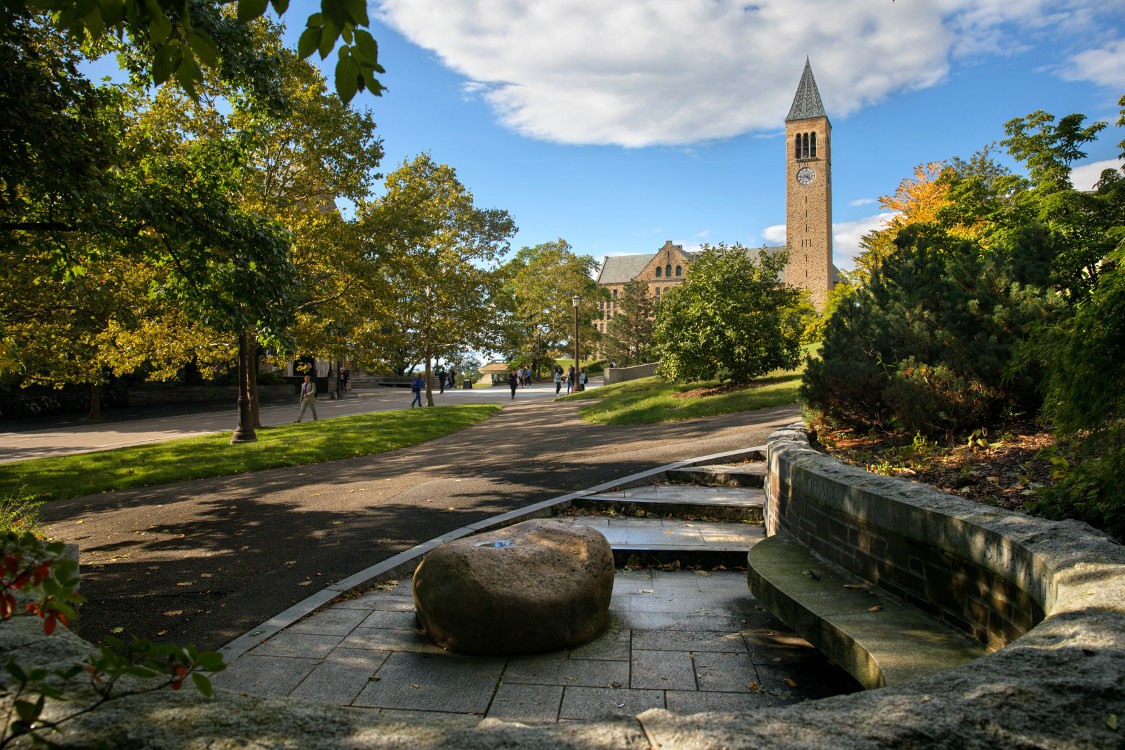
Each year, alumni have the opportunity to elect two representatives to join the 64-member Cornell University Board of Trustees. All alumni are encouraged to participate in this long-standing tradition and cast their vote this February. Voting begins on Sunday, February 1, 2026, and it concludes on Saturday, February 28, 2026.
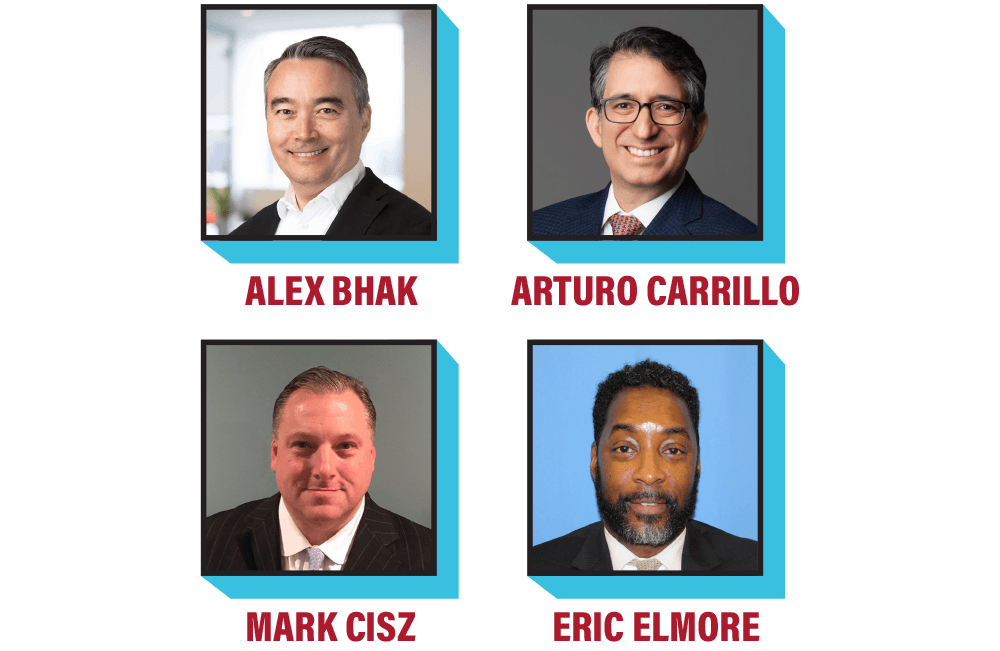
Before casting your ballot, we invite you to learn more about each candidate. The Committee on Alumni Trustee Nominations (CATN) has reviewed alumni submissions and nominated the following four candidates to this year’s ballot:
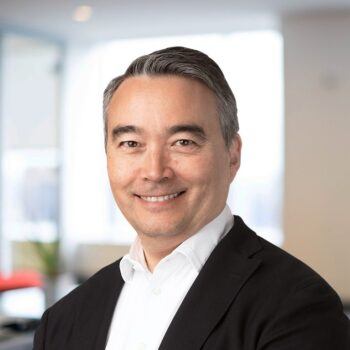
Alex Bhak ’89
Why did you choose Cornell?
I chose Cornell because it uniquely matched both the depth and breadth of my interests. In high school, I was drawn to the natural sciences and computer science—fueled in part by Carl Sagan and a fascination with understanding the universe—but I was equally curious about government, history, and international relations. Cornell offered rare strength across both engineering and the arts and sciences, allowing me to pursue physics while keeping my intellectual options open. What sealed it was a campus visit during my junior year of high school: walking down Libe Slope in the cold Ithaca air, hearing the chimes from McGraw Tower, and feeling the energy among the students, which was reinforced by a separate, memorable conversation back home with a Cornell Alumni Admissions Ambassador Network (CAAAN) alumnus. Coming from a small town in Ohio, I was able to attend Cornell through an Air Force ROTC scholarship. I never looked back.
Describe an experience you had at Cornell that is especially meaningful today. Why is it still so important to you?
One experience at Cornell that feels especially meaningful today was my time as a research associate at the Wilson Synchrotron. Much of the work was hands-on: writing Fortran libraries so physicists could analyze data, crimping cables to install networks, even de-commissioning aging super-minicomputers. What stays with me most is the culture—deep intellect and intense focus on the science, shared with peers who learned alongside one another with generosity and humor, often expressed through pun-filled hallway conversations. And then there were moments when the loudspeaker announced the synchrotron ring going live and a hush fell over the corridors as everyone held their breath. That experience taught me that discovery is collaborative, uncertain, and human. I remember walking out of the building afterward with a sense of quiet awe, knowing I wanted to stay close to work that mattered.
Consider a pressing issue the world faces today. What role do you feel Cornell students or faculty can play in addressing it?
One of the most pressing issues the world faces today is how artificial intelligence reshapes society. Having spent my career in technology and media, I have had a front-row seat in the opening act of a once-in-a-generation shift—one that promises extraordinary gains in knowledge and productivity while raising profound questions about trust, ethics, and security. Cornell is uniquely positioned to help society navigate this moment. Its strength across disciplines—from computer science and engineering to economics, agriculture, communication, and philosophy—enables the cross-disciplinary thinking AI demands. Cornell’s public-private character further sharpens this perspective. Students in particular can play an active role now through study, responsible use, and the long work of ensuring AI serves humanity rather than undermines it.
What calls you to volunteer service for Cornell?
“Is that all there is?” Frank H. T. Rhodes asked us at commencement. It’s a question I have carried with me ever since. I took it to mean that Cornell equips us not just to succeed, but to choose how we give back. I volunteer for Cornell because of all it has given me, and because it is worthy of service. As chair of the CAAAN Advisory Committee, I worked with Admissions, Alumni Affairs, and thousands of CAAAN volunteers to onboard younger alumni and expand our international volunteer community during significant change. The work was demanding and often messy but seeing alumni across generations and continents step up with creativity and commitment was energizing. Volunteering is my way of giving back to the place that shaped me beyond the classroom, and of paying it forward when many students, especially those from non-traditional backgrounds, face greater uncertainty and economic pressure than my generation did.
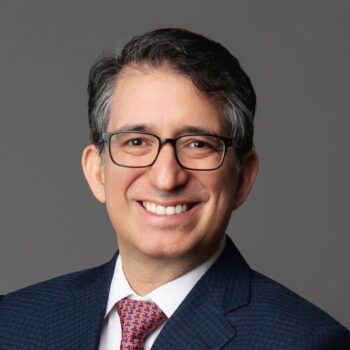
Arturo Carrillo ’96, MEng ’97
Why did you choose Cornell?
Choosing Cornell began with my decision to study in the United States rather than remain in Mexico City. I was drawn to the American university model, with its residential campus and liberal arts foundation, which offered both academic rigor and intellectual breadth. I sought a top-tier engineering education combined with the freedom to take classes across multiple colleges, and Cornell stood out early in my search. The application process involved research at the Benjamin Franklin Library (affiliated with the American Embassy) and months of relying on the Mexican mail service, but it all worked. Once on the Hill, Cornell exceeded my expectations, combining rigorous engineering training with broad interdisciplinary exploration. I signed up for my core engineering classes and a writing seminar on the French revolution. I was off to the races.
Describe an experience you had at Cornell that is especially meaningful today. Why is it still so important to you?
My most salient experience was living its incredible breadth of fields of study. When I arrived at Cornell, I was able to drink from the proverbial fire hose: from humanities classes to rigorous engineering coursework. What made the experience especially meaningful was that everyone around me was doing the same. My closest friends were architects, philosophy majors, playwrights, and engineers, each pursuing their passions with intensity and curiosity.
Years later, as our careers have taken us in many directions, those relationships endure. Those late-night talks are now holiday check ins and dinners during business travel. But I continue to learn from them and to rely on their breadth of Cornell expertise in my professional life. This living expression of “… any person … any study” remains deeply important to me and worth protecting.
Consider a pressing issue the world faces today. What role do you feel Cornell students or faculty can play in addressing it?
The world today feels markedly different from my time on the Hill. In the 1990s, technological progress inspired optimism, and political disagreements were largely debates over ideas rather than identities. Today, we face profound challenges: economic inequality, climate change, rising public debt, and aging populations, but the most troubling issue is the erosion of constructive dialogue and a shared sense of purpose.
Cornell is uniquely positioned to respond by training students to approach problems through evidence, rigorous analysis, and open debate. Solutions are not ideological, they are grounded in facts. Cornell students and faculty can lead by modeling respectful disagreement, exploring competing approaches, and advancing knowledge in the spirit of free expression and intellectual honesty.
What calls you to volunteer service for Cornell?
My commitment to volunteer service at Cornell is rooted in gratitude and conviction. During my junior year at Cornell, Mexico experienced a severe financial crisis and the peso lost more than half its value, making my family’s support unsustainable. I returned from winter break expecting to withdraw, but Cornell’s Office of Financial Aid stepped in with a combination of grants and loans that allowed me to graduate. The following summer, a Cornell alumnus at J.P. Morgan in Mexico gave me my first professional opportunity. Cornell has been central at pivotal moments in my life. Giving back honors that support and reflects my belief that Cornell will continue to drive scientific discovery, address global challenges, and sustain the humanities and arts.
Mark Cisz ’91

Why did you choose Cornell?
As the youngest child in a lower-income family in New York State, I had limited options for getting into and affording college. When I was in high school, two very proud and successful CALS alumni, J. Brooks ’65 and F. Sorochinsky ’54, went out of their way to discuss how Cornell had such a profound effect on their lives. We spoke about my goals and they both strongly encouraged me to apply. After touring campus, seeing the roster of classes and sitting in on Doc Aplin’s “Introduction to Business Management” class, I couldn’t imagine myself going anywhere else! Cornell was my dream school, but it was also my biggest reach school both academically and financially. CALS was a great option for me given it was one of Cornell’s New York State contract colleges with discounted tuition, work-study jobs, resident advisor opportunities, and scholarships, all crucial for my ability to afford Cornell.
Describe an experience you had at Cornell that is especially meaningful today. Why is it still so important to you?
Cornell taught me success often hinges on the kindness and support of others. During the fall of my senior year, I almost left Cornell before completing my degree. My father had been unemployed and, despite my financial aid, I had no way to meet my bursar obligations. Susan Murphy ’73, PhD ’93 and CALS Dean David Call ’54, MS ’58, PhD ’60 awarded me a scholarship from the Leon Family to cover my remaining obligations for the year. The Leons were farmers who received kindness and support from CALS and the Cornell Cooperative Extension to help their farm. In turn, the family bequeathed funds to Cornell to help students. I am deeply grateful for how significantly Cornell has enriched my life and for the kindness and support Susan, Dean Call and the Leon family extended to me. My wife and I set up our own scholarship fund; I’m so grateful that we can show students our kindness and support.
Consider a pressing issue the world faces today. What role do you feel Cornell students or faculty can play in addressing it?
A major issue today is the erosion of trust in higher education and science, driven by growing skepticism, misinformation, and rapid technological change. As new attitudes and technologies reshape academia, the very concept of academic discipline is being questioned, making it more important than ever for Cornell to demonstrate its value and relevance. Cornell students and faculty are uniquely positioned to address this issue. Advancing research in science, media literacy, data science, and ethical communication, Cornell can reaffirm the importance of rigorous, evidence-based inquiry. Moreover, Cornell can lead by example in exploring new areas of scientific research on campus and through Cooperative Extension programs. Through initiatives like CALS’ Transdisciplinary Moonshot cohorts, Cornell can lead in innovation and interdisciplinary collaboration to solve real-world problems.
What calls you to volunteer service for Cornell?
My dedication to Cornell is deeply rooted in gratitude, pride, and a desire to make a meaningful difference. I volunteer because of the profound and lasting impact Cornell has had on my life and my family. As a first-generation student, Cornell opened doors for me that I never imagined possible, providing not only a world-class education but also lifelong friendships. The opportunities I received enabled me to thrive on campus and in my career on Wall Street. My gratitude extends beyond my own experience, as Cornell has also enriched the lives of my wife and children, creating a legacy of learning and growth within our family. I feel a deep responsibility to give back to the institution that has given us so much. Through service, I am able to do my greatest good, to support students, connect with fellow alumni, and contribute to Cornell’s ongoing commitment to “… any person … any study.”
Eric Elmore ’86, JD ’89
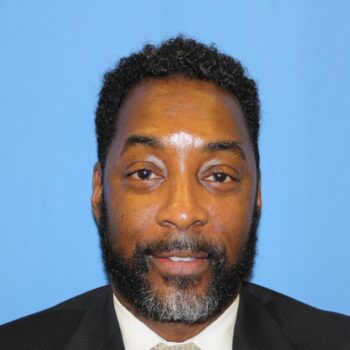
Why did you choose Cornell?
I chose to attend Cornell because it offered a rare combination of academic excellence, breadth of study, and an immersive learning environment. Its rigorous education and wide range of courses allowed me to explore my interests deeply, while the idyllic college-town setting of Ithaca fostered focus, reflection, and intellectual community. Free from the distractions of a large city, Cornell provided the space to fully engage with learning and personal growth. Together, these qualities made Cornell the ideal place for me to challenge myself academically and develop a strong foundation for my future.
Describe an experience you had at Cornell that is especially meaningful today. Why is it still so important to you?
My semester in the Cornell-in-Washington public policy program remains especially meaningful because it bridged rigorous academic study with firsthand exposure to federal policymaking. Taking Cornell-taught courses in Washington, DC while observing how policy decisions affect everyday citizens transformed my understanding of public service. Living and learning in a dynamic city beyond Ithaca and New York broadened my perspective and clarified my professional purpose. That experience continues to matter because it led me to return to Washington after graduate school and commit more than three decades to public service. It shaped not only where I built my career, but also how I approach civic responsibility and leadership today.
Consider a pressing issue the world faces today. What role do you feel Cornell students or faculty can play in addressing it?
One of the most pressing challenges facing the world today is the widening gap between those who can access a first-rate education and those who cannot. Education is a pathway to enlightenment and opportunity, and Cornell students and faculty are uniquely positioned to help close this divide. Through teaching, research, mentorship, and public engagement, they can extend knowledge beyond campus and expand opportunity for under-resourced communities. A quality education equips individuals to understand history, engage thoughtfully in an increasingly complex society, and develop informed solutions to global challenges. By fully embracing Cornell’s commitment to “… any person … any study,” the university can help ensure that educational excellence remains a powerful engine of social mobility and global progress—not privilege alone.
What calls you to volunteer service for Cornell?
I am drawn to volunteer service for Cornell as a first-generation college graduate who understands how transformative access to opportunity can be. Cornell provided not only a world-class education, but also mentorship, community, and a sense of belonging that helped me realize my full potential. I learned the importance of service through my fraternity, Alpha Phi Alpha—founded at Cornell in 1906—which instilled a lifelong commitment to giving back. I am especially motivated to support students who, like me, may arrive without a roadmap but with enormous promise. In that spirit, I am proud to have co-founded the George Washington Fields LLB 1890 Scholarship at Cornell Law School, which supports under-resourced, high-achieving students. Through continued service, I seek to help ensure Cornell’s opportunities remain accessible to all who are willing and able to pursue them.