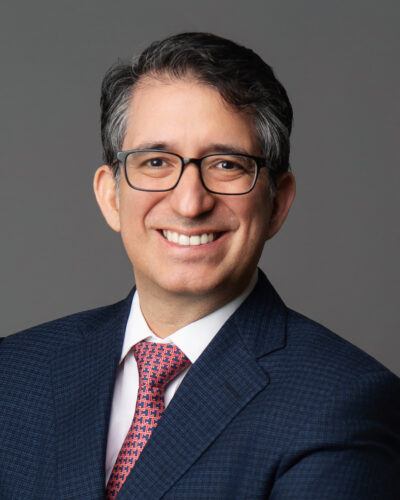
Meet the 2026 trustee candidates preview

Alex K. Bhak

  • Cornell degree: BA ’89 (A&S)
    London, UK

    Professional experience:

    • Bain & Company, senior partner, 2004–present
      • Global Partner Compensation and Promotion Committee, 2025–present
      • Global Head of Telecom, 2024–present
      • Partner Head of Recruiting, United Kingdom, 2024–present
      • TMT and Private Equity Practices, 2004–present
      • Head of TMT Practice, United Kingdom, 2018–2024
    • Accenture, 1998–2004
    • Asiana Airlines, 1993–1996
    • United States Air Force, 1989–1993

    Alumni service:

    • Cornell University Council, member, 2022–present, 2016–2020; administrative board, ex officio, 2023–2025
    • Cornell Alumni Admissions Ambassador Network (CAAAN) Advisory Committee, member, 2017–present; chair, 2023–2025; vice chair, 2021–2023
    • CAAAN, member, 2003–present; UK committee co-chair, 2013–present; Admitted Students Reception host (multiple years), Fulbright Fair representative (multiple years)
    • Frank H.T. Rhodes Exemplary Alumni Service Awards Selection Committee, member, 2023–2025
    • 35th Reunion Campaign Committee, member, 2023–2024
    • Cornell Club of the United Kingdom, CAAAN London representative, 2016–2021
    • Cornell Sesquicentennial Celebration, advisor (London)
    • Cornell Friends of Physics

    Community/public service/philanthropic priorities:

    • Bain UK, sponsoring/founding partner, East and Southeast Asians, 2024–present
    • Hampstead Scientific Society, 2020–present
    • University of Chicago Booth School of Business, consulting executive career advisor, 2016–present
    • Founder, Veterans at Bain London, 2011–present
    • RAND Center for Asia Pacific Policy, Corporate Council, 1995–1996
    • The Asia Society Southern California Center Advisory Board, member, 1994–1996
    • Eastern Region Company Grade Officers’ Council, 1990–1992
    • Combined Federal Campaign, keyworker, 1989–1993
    • Royal British Legion, Poppy Appeal volunteer

    Other education:

    • MBA, The University of Chicago Booth School of Business, 1998

    Student involvements/activities:

    • Air Force ROTC, Cadet Commander and distinguished graduate
    • Cornell University ROTC Relations Committee
    • Laboratory for Nuclear Studies, research associate (Wilson Synchrotron Laboratory)
    • Scabbard and Blade, National Military Honor Society
    • Sigma Phi Society, president
    • University Unions Program Board, Assistant Lecture Series chair

    Please describe what you feel is the single most important issue the board of trustees should address.

    Cornell’s financial pressures—shrinking funds, rising costs, and uncertainty across higher ed—require a reimagined institutional model. To sustain access, diversity, and excellence, the university must steer change with clarity. Financial stability matters, but lasting success depends on strategy, imagination, and execution.

    Describe the reasons you are interested in serving on the board. What strengths and attributes would you bring to this role?

    My career advising technology, media, and telecom leaders—and the investors behind them—has shown me how institutions evolve and where thoughtful collaboration with industry can spark new opportunities. As chair of the CAAAN Advisory Committee, I worked with admissions and alumni affairs to reinvent how 5,000+ alumni volunteers engage with prospective students. Twenty-five years living and working across Asia and Europe broadened my view of Cornell’s global community. As trustee, I hope to help Cornell navigate change, strengthen constructive ties with the private sector, elevate its international presence, and protect the university’s mission for future generations.

    In your opinion, what does Carl Becker’s concept of “freedom and responsibility” mean for today’s Cornell community?

    What I remember most from Rockefeller and McGraw is not specific lectures, but the ideas they sparked. I vividly recall debating those ideas and being pushed to think critically—experiences at the heart of the Cornell tradition Becker describes. He shows that universities must evolve, yet only in ways that protect what makes them worthy of trust: freedom of thought, integrity, humane judgment, and democratic values. As Cornell faces financial and societal pressures, its future depends on adapting wisely while preserving the ethos that sustains a free and open academic community.

    President Michael I. Kotlikoff recently said that we must do “the difficult and necessary work of adapting to an uncertain present; and planning for a future where the expertise, knowledge, and democratic ethos of Cornell will be even more critical than ever before.” In your opinion, what does this mean for Cornell?

    President Kotlikoff signals that uncertainty is not a pause but a summons. Cornell must adapt without perfect knowledge, building flexibility into how it funds, organizes, and sustains its mission. My early military service taught me to make sound decisions amid ambiguity—a lesson that feels relevant now. Agility and innovation matter as pressures mount, yet adaptation must also protect Cornell’s commitments to free inquiry, academic freedom, and democratic purpose. Cornell must continue forming leaders whose expertise and civic judgment strengthen society. The charge is clear: evolve with resolve, and preserve the principles that define us.

    Additional information:

    I came to Cornell to study physics and soon found myself working in the subterranean world of the Wilson Synchrotron Laboratory—an experience that opened far more than an academic path. Before beginning a global career, I served as an Air Force officer, an early chapter that shaped my sense of purpose. Growing up in an Ohio town and later living across the U.S., Asia, and Europe broadened my perspective in ways I couldn’t have predicted. Now a senior partner at Bain and living with family in London, I stay connected through CAAAN, Cornell University Council, and alumni communities abroad. I'm grateful for the opportunities Cornell made possible.

    Back to candidate list


Arturo Carrillo

  • Cornell degree: BS ’96, MEng ’97 (Engineering)
    Dallas, TX

    Professional experience:

    • Chief financial officer, Tabani Group, 2016–present
    • Private equity managing director and chief investment officer, Dobbs Equity Partners, 2013–2016
    • Transaction Execution Grey Mountain Partners, 2012
    • Chief financial officer and then president, Vitro America, 2004–2011
    • Strategic planning manager, Vitro S.A., 2002–2004
    • Financial analyst, Salomon Brothers, 1997–2000

    Alumni service:

    • Cornell University Council, immediate past chair, 2024–present; chair, 2022–2024; vice chair, 2020–2022; Nominating Committee, chair, 2024–present; Membership Committee, chair, 2019–2020; vice chair, 2018–2019; Council life member, 2024–present; member, 2016–2020; Administrative Board member-at-large, 2017–2019
    • 30th Reunion Campaign Committee, member, 2025–present
    • Cornell Alumni Association of Dallas Fort Worth, director, 2020–present; CAAAN co-representative, 2017–2020; Speaker Series chair, 2017–2018; vice president, 2015–2017
    • Tower Club National Committee, member, 2023–2025
    • Frank H.T. Rhodes Exemplary Alumni Service Awards Selection Committee, member, 2022–2024
    • Regional Club Advisory Committee, vice chair, 2020–2022; member, 2018–2019
    • Cornell Alumni Admissions Ambassador Network, general chair DFW and Texas Non-Metro Areas, 2017–2020; Dallas County co-chair, 2015–2017; member, 2008–2015

    Community/public service/philanthropic priorities:

    • Boy Scouts of America, Troop 82, various positions including scoutmaster

    Other education:

    • MBA, Harvard Business School, 2002

    Student involvements/activities:

    • President, Mexican Student Association (international student organization)
    • Protestant Cooperative Ministry

    Please describe what you feel is the single most important issue the board of trustees should address.

    Cornell faces heightened scrutiny from government, the public, and its own alumni at a moment when institutional leadership is paramount. The Board of Trustees must lead in reaffirming Cornell’s preeminent role in society by anchoring the university firmly in “… any person … any study,” while safeguarding financial independence.

    Describe the reasons you are interested in serving on the board. What strengths and attributes would you bring to this role?

    After many years of volunteer service, it would be an honor to also contribute at the board level and further advance the university’s mission. As a chief financial officer, my career has focused on securing financial resources, strengthening systems, and implementing disciplined processes that support long-term institutional resilience. In both volunteer and leadership roles, I bring a detail-driven, mission-focused approach to problem-solving and governance. I would bring the same rigor, stewardship, and collaborative mindset to board service.

    In your opinion, what does Carl Becker’s concept of “freedom and responsibility” mean for today’s Cornell community?

    Professor Becker reminds us that we are bound to honor all that “comprises Cornell University,” highlighting intellectual integrity and devotion to the truth. His charge stands the test of time as Cornell’s ability to do groundbreaking research and foster educational excellence can only be achieved through our continued efforts of collaboration among departments and colleges, as well as rigorous analysis of facts without influence from dogma or political pressure.

    President Michael I. Kotlikoff recently said that we must do “the difficult and necessary work of adapting to an uncertain present; and planning for a future where the expertise, knowledge, and democratic ethos of Cornell will be even more critical than ever before.” In your opinion, what does this mean for Cornell?

    As annual cost of attendance approaches $100,000 and federal funding grows more uncertain, Cornell must carefully adapt how it sustains its core mission of education and discovery. President Kotlikoff’s message calls for strategic discipline: strengthening what works, rethinking what does not, and diversifying resources to preserve academic excellence and access. This moment requires clear priorities, financial resilience, and long-term planning so Cornell can remain faithful to its founding principles while meeting the demands of our uncertain times.

    Additional information:

    Something most people don’t know is that I first came to Cornell as an international student, having been born and raised in Mexico City. Since then, Cornell has remained central to our family’s story—from being hired for my first internship by a Cornell alumnus, to meeting my wife, Jamie (Dreher) Carrillo ’96. We have maintained deep alumni involvement through clubs and leadership roles wherever we have lived, including more than 15 years in Texas. We return often to Ithaca and remain deeply grateful for all Cornell has given us.

    Back to candidate list

Mark M. Cisz

  • Cornell degree: BS ’91 (CALS, Dyson School)
    Northport, NY

    Professional experience:

    • Managing director, JPMorgan Chase, 1997–present

    Alumni service:

    • Cornell University Council, member, 2025–present, 2019–2023
    • Class of 1991 Reunion Campaign Committee, chair, 2025–present (35th), 2020–2021 (30th)
    • Parents Leadership Council, member, 2023–present
    • Parents Committee/Family Fellows, co-chair 2023–present, 2021–2022; member, 2018–2022
    • College of Agriculture and Life Sciences Campaign Committee, member, 2021–present
    • College of Agriculture and Life Sciences Dean’s Advisory Council, member, 2021–present
    • Class of 1991 Class Officer, membership co-chair, 2021–present
    • Annual Fund Leadership Committee, co-chair, 2019–present
    • Cornell Club of Long Island, president, 2019–present
    • Cornell Cooperative Extension of Suffolk County: Long Island horseshoe crab monitoring, Crab Meadow site leader, 2017–present
    • Dyson School finance career trek to NYC, sponsor, 2025, 2024
    • Cornell Alumni Advisory Board, convener, 2023–2025; member, 2020–2023; membership committee, 2019
    • Cornell Alumni Admissions Ambassador Network, member, 2016–2025,1992–1998
    • Cornell Cooperative Extension of Suffolk, Board of Directors, president, 2017–2023
    • Einhorn Center for Community Engagement, volunteer, 2022
    • Committee on Alumni Trustee Nominations, member, 2017–2021
    • Dyson School Career Boot Camp Recruitment Panel (networking/branding in recruiting), 2019
    • President’s Circle Committee, member, 2016–2019
    • Tower Club Metro NY Committee, member, 2012–2018
    • Cornell Club of New York: Young Alumni Mentorship Program

    Community/public service/philanthropic priorities:

    • Education Foundation for Suffolk County Extension, Inc., Board of Directors, president, 2019–present
    • The New York Landmarks Conservancy, Board of Directors, 2018–2021
    • JP Morgan Cornell MBA recruiting, Investment Banking Associate Program, 2013–present
    • JP Morgan undergraduate recruiting, Cornell team captain, investment banking intern/analyst, 1997–present

    Student involvements/activities:

    • Cornell Democrats
    • Cornell Entrepreneurs Club
    • Intramural sports: baseball, basketball, squash
    • Resident advisor

    Please describe what you feel is the single most important issue the board of trustees should address.

    Despite Cornell’s endowment, fundraising successes, and reinstated funding, Cornell faces significant financial challenges to its long-term viability and affordability. Trustees must provide strong financial oversight to uphold Cornell’s commitment to an accessible education for “any person” to “find instruction in any study.”

    Describe the reasons you are interested in serving on the board. What strengths and attributes would you bring to this role?

    As a first-generation student, alumni volunteer, spouse of an alum, and a proud parent of three Cornellians, I am deeply grateful for how significantly Cornell has enriched my life. Supported by work-study jobs, resident advisor opportunities, and scholarships, I thrived on the Hill. Much of my professional success has been shaped by my time at Cornell. I have given back through volunteer leadership, fundraising, student mentoring, and creating a scholarship to help current students. As a trustee, I would continue this commitment—using my skills, experience, connections, and passion to help Cornell thrive and support future generations.

    In your opinion, what does Carl Becker’s concept of “freedom and responsibility” mean for today’s Cornell community?

    Professor Becker’s address remains vital today: academic freedom, including freedom of thought, speech, and inquiry, must be balanced with ethical responsibility. In today’s divided climate, it is more important than ever for Cornell to foster respectful intellectual exploration and diversity. Cornell’s role is to prepare future leaders who uphold democratic values, recognizing that democracy’s strength lies in the diversity of thought. Young minds join our community seeking knowledge and find newfound freedoms in inquiry. Becker’s message reminds them to temper those freedoms so as not to harm or silence others to ensure the public good.

    President Michael I. Kotlikoff recently said that we must do “the difficult and necessary work of adapting to an uncertain present; and planning for a future where the expertise, knowledge, and democratic ethos of Cornell will be even more critical than ever before.” In your opinion, what does this mean for Cornell?

    The shift in the perception and support of higher education, as well as the rapid changes in technological advances and economic pressures, all have resulted in greater uncertainty for the future of the university. President Kotlikoff’s statement calls for Cornell to be adaptable, nimble, and visionary when responding to today’s challenges without compromising our fundamental principles. Strategic thinking focused on these challenges is critical for the board to ensure Cornell is best prepared to lead in a future where our value-driven research, expertise, and values are more essential than ever to contribute positively to society.

    Additional information:

    I met my wife, Dr. Linda Moerck-Cisz ’91, on a blind date on the steps of Willard Straight Hall. We have four amazing children—all four are Cornellians (Bryan ’21, Kaitlyn ’22, Stephen ’27, and Charlotte ’30). Watching them thrive at Cornell has been a joy! Linda and I enthusiastically support Stephen at every Sprint Football game, cheering with our Big Red cowbell. I enjoy sharing my experiences on the Hill and on Wall Street with students through recruiting, resume help, mock interviews, and networking. Volunteering has also been a wonderful experience, allowing me to connect with Cornell alumni, friends, and parents.


    Back to candidate list

Ernest Eric Elmore

  • Cornell degree: BA ’86, JD ’89 (A&S, Law)
    Silver Spring, MD

    Professional experience:

    • Merger and acquisition antitrust consultant, 2025–present
    • Antitrust Law Section of the National Bar Association, chairman, 2025–present
    • Federal Trade Commission, general attorney, 2000–2025
    • ABA Antitrust Law Section’s Corporate Counseling Committee, vice chairman, 2022–2024
    • U.S. Attorney’s Office for DC, special assistant U.S. attorney, 1999–2000
    • Federal Trade Commission, attorney advisor to commissioner, 1998–1999

    Alumni service:

    • Cornell Law School E&I Alumni Leadership Council, member, 2021–present
    • Cornell University Council, life member, 2020–present, Administrative Board ex officio, 2021–2023; member, 2018-2020, 2010-2014; Marketing Committee chair, 2015–2016; Mentoring and Orientation Committee chair, 2014–2015; Administrative Board member-at-large, 2013–2014
    • Cornell Law School Advisory Council, member, 2018–present
    • Cornell Black Alumni Association, life member, 1986–present; vice president, 2006–2009
    • Cornell Law School Regional Event Planning Committee, member, 2014–2024
    • Cornell Mosaic, vice chair 2022–2023; Executive Committee member, 2019-2023; member-at-large, 2018–2023
    • Cornell event speaker, various events, 2014–2023
    • Cornell Alumni Advisory Board, member, 2020–2022
    • Cornell Black Lawyers Alumni Network, member, 2014–2022; president, 2016–2019
    • Cornell Alumni Admissions Ambassador Network, member, 2013–2019
    • Cornell Law School Alumni Association Board of Directors, president, 2016–2018; vice president, 2014–2016; member, 2012–2018
    • Cornell Club of Washington, member, 2006–2014
    • Cornell Law School 20th Reunion Campaign Committee, member, 2008–2009

    Community/public service/philanthropic priorities:

    • Alpha Light Fund, Inc. (House of Alpha Leadership Institute)
    • Alpha Phi Alpha Fraternity, Inc., life member
    • D.C. Lawyers Annual Networking Reception
    • Department of Justice Pro Bono Program
    • East State Jazz Band (alto saxophone)
    • Jewels Heritage Monument Project, chairman
    • Sigma Delta Tau Legal Fraternity, Inc.
    • Smithville School Museum and Education Center, director

    Student involvements/activities:

    • Alpha Phi Alpha Fraternity, Inc., Alpha Chapter
    • Big Red Marching Band
    • Cornell in Washington
    • Cornell University Hearing Board
    • Minority Undergraduate Law Society
    • Multi-cultural Greek Letter Council
    • Quill & Dagger Honor Society

    Please describe what you feel is the single most important issue the board of trustees should address.

    Consistent with its mission of “… any person … any study,” Cornell must, to the extent possible, ensure that every ready, willing, and capable student can access a top-tier education at Cornell—one not reserved only for the privileged or wealthy.

    Describe the reasons you are interested in serving on the board. What strengths and attributes would you bring to this role?

    I am motivated to serve on the Cornell Board of Trustees because I want to help elevate Cornell’s standing as a leading global institution and contribute to shaping its long-term direction. As a loyal alumnus with a record of Cornell leadership, I bring a perspective informed by service, inclusion, and advocacy for under-represented communities. I excel at building teams and forging consensus—skills essential for effective governance. Coupled with strong communication abilities and a deep commitment to public service, diversity, and educational access, I would work to ensure Cornell remains both excellent and equitable for future generations.

    In your opinion, what does Carl Becker’s concept of “freedom and responsibility” mean for today’s Cornell community?

    Freedom and responsibility mean creating space for ideas to flourish—even those that challenge accepted beliefs or make us uncomfortable. As a university, Cornell must protect open expression and the exchange of diverse perspectives, including those we might strongly oppose. But freedom of expression carries an equal responsibility: to respect the right of others to speak, even provocatively, so long as their ideas do not pose a reasonable threat of serious harm.

    President Michael I. Kotlikoff recently said that we must do “the difficult and necessary work of adapting to an uncertain present; and planning for a future where the expertise, knowledge, and democratic ethos of Cornell will be even more critical than ever before.” In your opinion, what does this mean for Cornell?

    Cornell must remain nimble in navigating current and future challenges to fulfill its mission of discovery, education, and public engagement—enhancing the lives of the people of New York and communities around the world

    Additional information:

    Eric is a first-generation college graduate with BA from Cornell’s College of Arts & Sciences and a JD from Cornell Law School. He has built a distinguished career in public service as an antitrust attorney at the U.S. Federal Trade Commission and has held key leadership roles in the American Bar Association’s Antitrust Law Section and the National Bar Association. A dedicated Cornell volunteer, Eric serves on the Cornell Law School Advisory Council and Cornell University Council, among others. A proud native of Jamaica, Queens, he now resides in Silver Spring, MD. He is passionate about helping others access a quality education.
    Back to candidate list